The weather, especially the wind dictates our travel planning, our comfort and our safety and we talk about it endlessly both with each other and any other yachties we meet up with. The sun, the wind, the rain, thunderstorms, the sea state, the dust, the moon, you name it. The other thing we think and talk about a lot are the anchorages we want to go to and how the wind affects them. So, it’s all clearly pretty important but how do we get all of this information and make decisions based on it?

To check the wind we use an App called Windy. I love it as you can see more than wind, it has overlays that show dust pollution, current fires, rain and storms, sea state (wave conditions) and a host of other things (including kite surfing locations!). Plus, it shows you a map and a timelapse of the weather for the next 5 days.


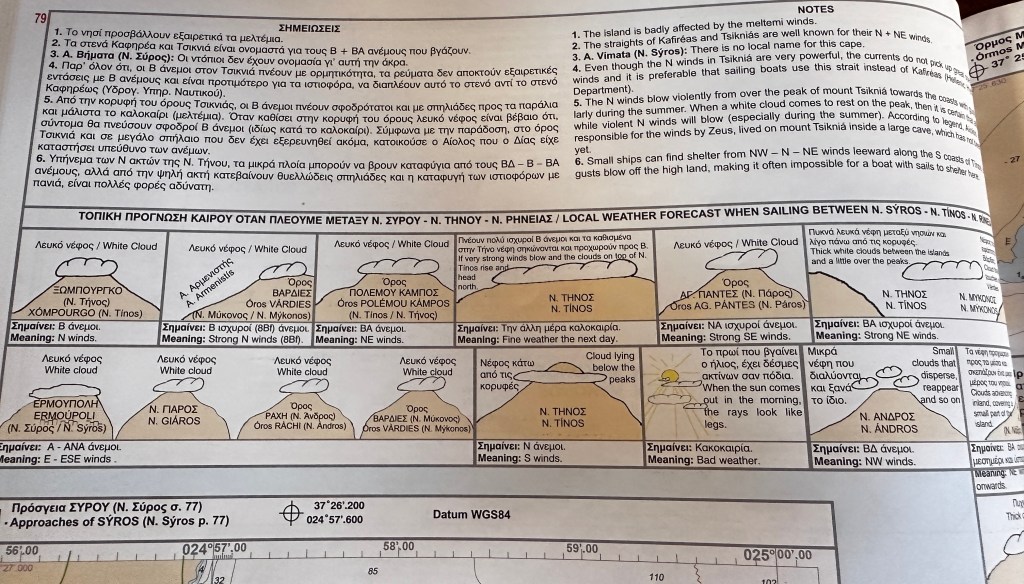
We rarely wake up with no idea of what we are going to do as the weather dictates all of our movements and that’s pretty obvious really but let’s unpack it a little more anyway. For example, we are currently in a Meltemi which is the northerly wind that typically blows through the Aegean in the summer months for 3-5 days at a time. It usually blows with a force hard enough (15-30+ knots) to mean we may need to shelter in a protected anchorage for a few days so we need to know when they are coming and plan accordingly. This means choosing an anchorage that will be protected from the north. Mostly we use a combination of methods to decide this. We have a Greek Waters pilot guide, a second Greek publication called the Eagle Ray Guide which is super as it has lots of anecdotal information taken from fishermen that give insight into very localised weather conditions. We learnt all about coffin shaped clouds that sit over islands during a meltemi and even secret spots to anchor.



Then we use an App called Navily which is crowd sourced information where people write a review about the anchorage giving you heaps of information about important things like the best tavernas…only joking, its more about whether the anchor will have trouble setting (because the sea floor can be sand, mud, rock, weed or a combination of these) or if the swell from ferries will be annoying or if it says it’s protected from a certain direction but actually isn’t…and if the beach bar plays bad music.


There’s been a new element introduced lately into the weather discussions and that is how and where do we find places where we get enough wind for Rick to wing foil and where it’s still comfortable to anchor. Rick needs 12-20 knots to have an excellent time. This means at least some of the time putting ourselves into the wind more than most people choose to if they have a choice. The advantage is that it’s cooler and there’s less flies and mosquitos to worry about but less calm pristine water for swimming in and the wearing nature of being buffeted by the wind day and night can get a bit on my nerves. Sometimes you find a sweet spot where it comes in for a few hours then calms off for the evening. Rare but appreciated a lot when it happens! Big wide open bays are best for kiting and the less boats the better as there’s less obstacles for him to tack around.

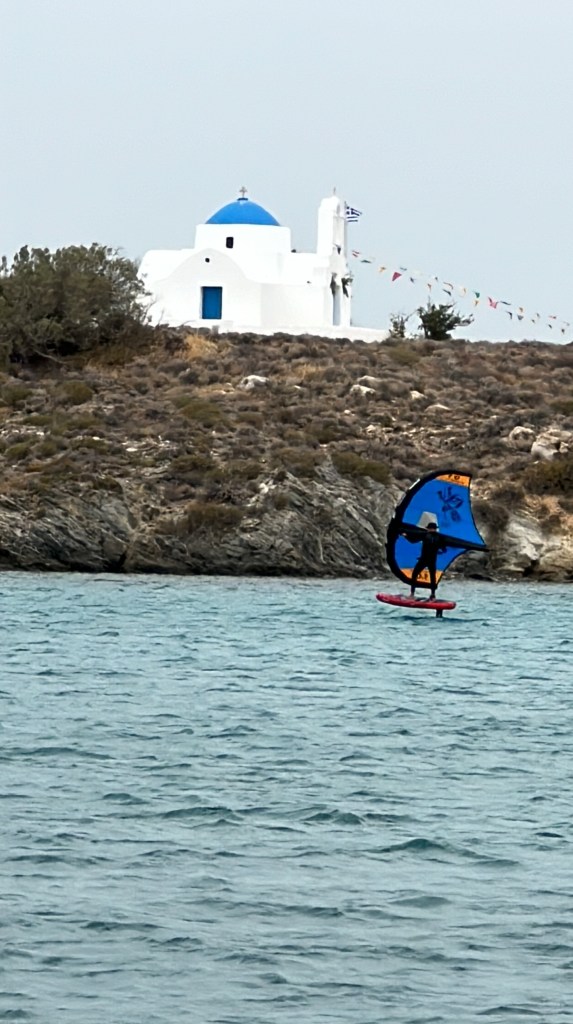

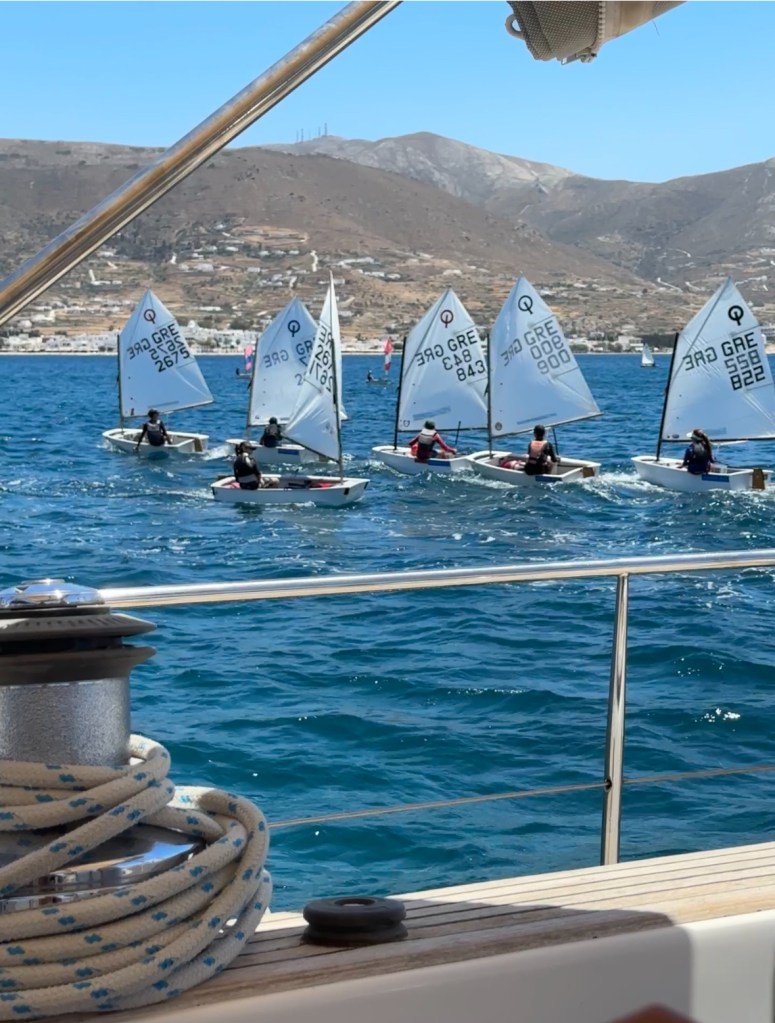
People often describe the Aegean, the Cyclades in particular, as having too much wind or none at all.
Back when we were total novices in the ‘80’s we hired a 29 foot boat from Piraeus (Athens’ port) and had many adventures whilst making every mistake in the yachting book. A night time anchor drag and needing help from the fishermen to get the boat into port plus not understanding we had to read and account for the weather when we were planning where to go. I’m not even sure what we used then for forecasting. Perhaps a VHF radio scheduled forecast but that would have been in Greek so perhaps we just decided to wing it. Anyway, out into the windy Cyclades we went going further and further from Athens thinking we’d spend the last day sailing back. Yep, a Meltemi arrived, we had a schedule and out we went despite eyebrow raises from the fishermen and a bit of sage advice saying ‘don’t go!’ We turned around and came back within an hour as we couldn’t make any way forward. Wet and cold but unharmed we were lucky. End of story was that we hopped off the boat and a charter skipper had to take it back for us as Rick had to leave to get back to work in the Middle East within 24 hours. Ahhh that’s youth for you, we were 21 and 25 then. Hopefully we have a bit more common sense now. But, of course, these experiences stay with you and despite the misadventures it was an amazing introduction to sailing for me and provided the inspiration for buying our first boat only a few years later.

It gives us a few laughs now as we time travel back to anchorages we visited first time around and a bit more understanding when people charting a yacht do something silly.
So, we use this information to decide where to go next and when to head there. We might catch the tail of a Meltemi to make our way to the south as it blows from the north or catch a southerly north. Then we look for anchorages that are protected from the wind (and waves). All of this heavily relies on having plenty of time as the weather can easily get in the way of plans. To travel from place to place means picking the right weather and the right anchorages and being rushed because we need to collect someone or pick up gear or do anything in a set time frame can really mess with that. It risks putting us in the uncomfortable situation of having to go when it’s not ideal or safe or rescheduling things. When people ask if they can visit an island we might be going to and it probably sounds a bit like I am trying to put them off when I can’t give a clear answer but this is why.
I suppose it beats discussing the news these days and we enjoy the planning and then coming up with a plan B as we change our minds with the weather changes. It keeps life fresh and interesting and if you ever spare us a thought were probably thinking about the wind (Rick certainly is!).


 ocean-pilgrim
Leave a comment