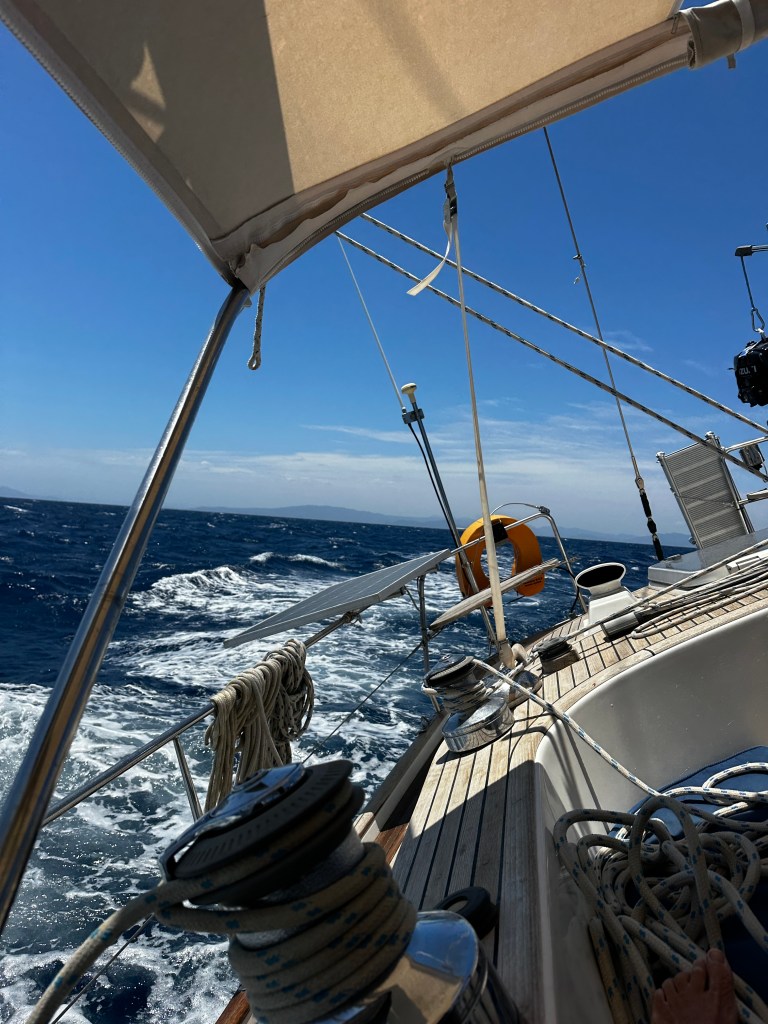
After finally heading out of the Saronic gulf (the gulf that contains Athens) with a hooray and an over the shoulder wave, complete with all the items we were waiting on from Poros, we headed straight out for the island of Kithnos. The wind was blowing from the north and we raced along with Intention as glad as we were to be sailing again across the deep blue waters of the Aegean, for the first stop on our trip into the Cyclades islands. Cyclades roughly means ‘circle’ and was named for the islands that surround the island of Delos, sitting pretty in the middle. Delos has been important as a trading centre and an island of temples, sacred ceremony, slavery and uprisings and piracy for 5000 years or so.

The Cyclades are well known today as they are the centre of tourism for the Greek Islands and their fortunes have changed from poor islands surviving on fishing and trading to the glitzy jewels of the Aegean.
There’s a funny thing that happens in the Greek islands when its windy. Firstly, it’s windy a lot so this is not an isolated incident. Our sail across to Kithnos was in a fresh, flat (meaning no waves or swells to slow us down) 20 knots but as we came into the anchorage the wind was accelerating down the hills and we found ourselves pulling in our sails and then anchoring with the wind blowing up to 30 knots. Fortunately, it eased into the late afternoon dropping to nothing by sunset. It’s known as Katabatic winds and it happens often here as the hills are quite high and even though you’re on the lee side (the protected side) the winds can be up to 10 to 20 knots stronger as they rocket down the hillsides. In some places, like Mt Athos up in Halkidiki you are advised to sail up to a few miles offshore not to be caught up in them.

We had been to this anchorage in 2022 arriving in the months after a large super yacht had run into a rock, been holed and was bought into the bay at night where it promptly sank in about 7 metres of water. The circumstances certainly didn’t make sense and there was a lot of suspicion around the cause. The boat was named OO7 and the bay became known as James Bond Bay pretty quickly.

It’s now been taken away and the bay is back to being crystal clear and empty of everything but a few yachts.


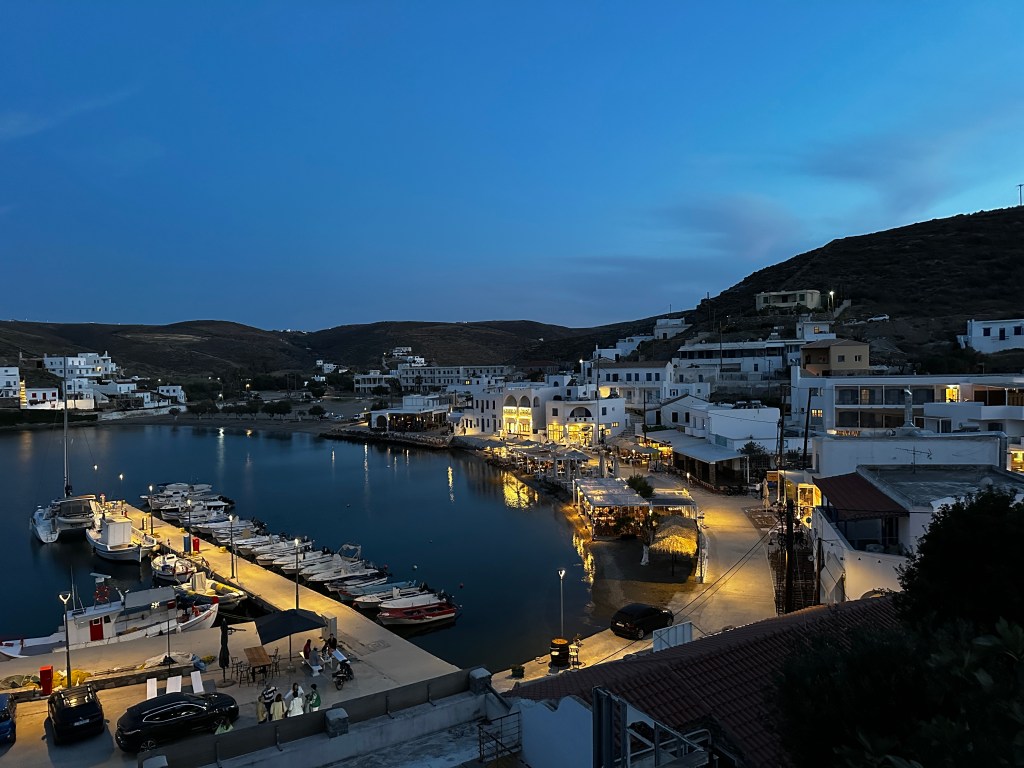
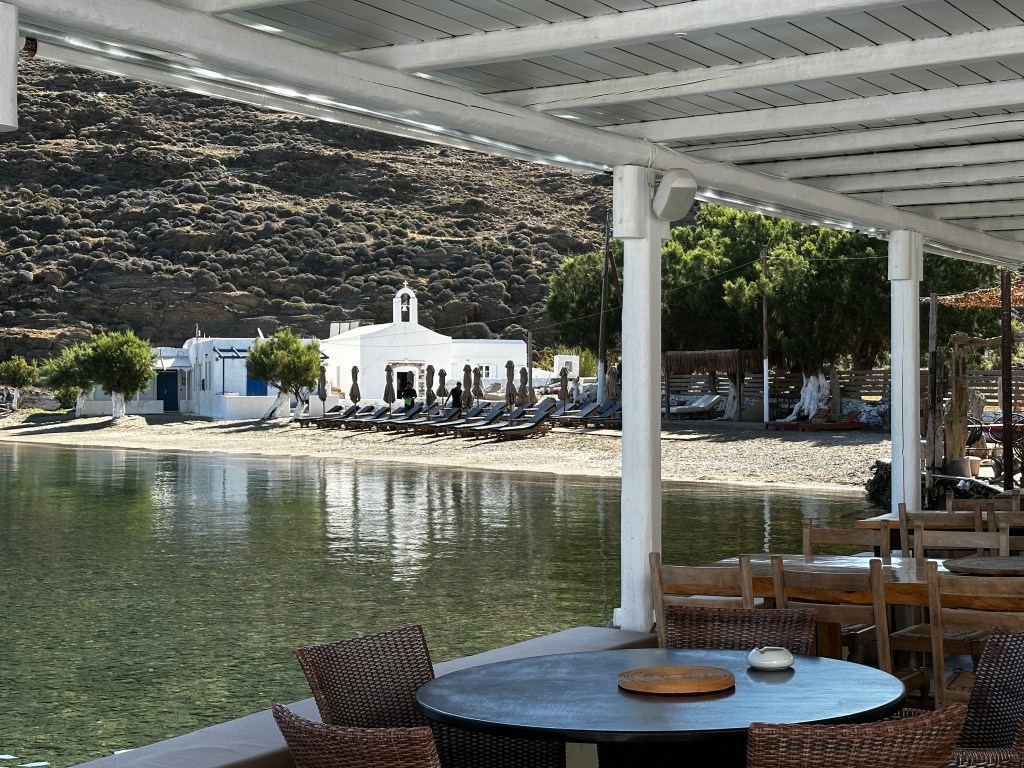
There’s a sand isthmus out to a small island, very rare in Greece, and this makes a beautiful scenic beach replete with a church on the top of the islet. It’s other claim to fame is a hot spring bubbling up on the beach with just enough room for two to fit in. The last time we had a soak in this but this time with more boats about we skipped it heading off after just one night to the tiny town on the tiny harbour of Loutra on the north eastern side of the island. Loutra means baths and the area also had its own hot spring. Once this spring ran through a large healing centre/sanitorium but this was abandoned and the spring diverted through an open gutter down onto the beach. This also had many visitors but it was very hot so a few waves breaking into the pool made it just about perfect. The town surrounding the little harbour was very charming and we spent a lovely night there.


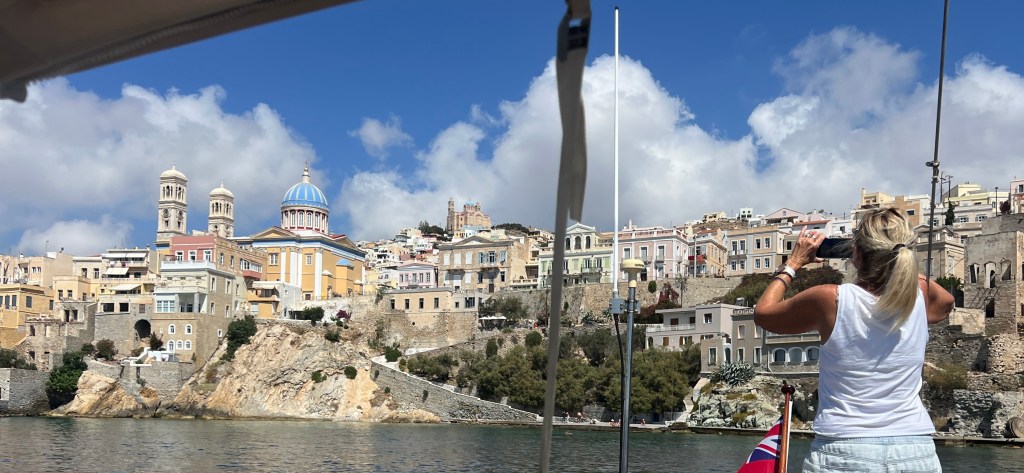
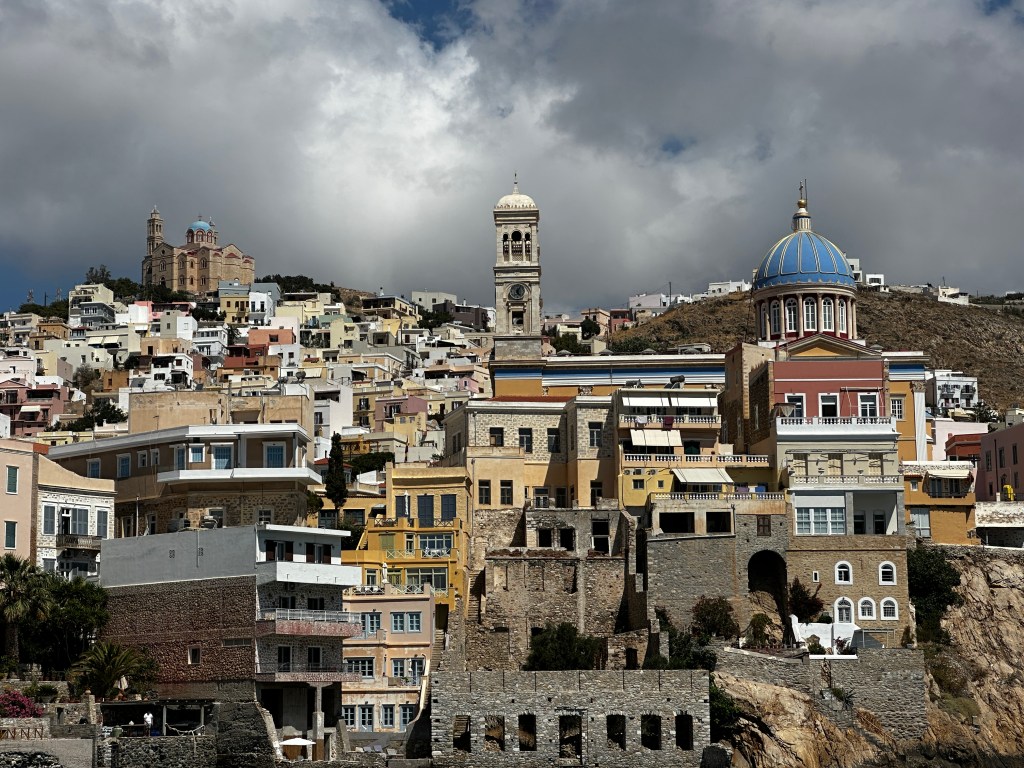
Then it was off to Delos, the island at the centre of it all. We sailed to an overnight stop on Syros then the following morning just had a look at the main town of Ermopouli before crossing to Riniea across a deep vlue velvet sea full of tiny striped dolphins.

Delos has been inhabited for at least 5000 years now there are only a few archaeologists on site. For generations it has been forbidden to either give birth or die there. You can find mythology saying it was because it was sacred and perhaps that’s true but it was also about ownership and inheritance and the Athenians wanting to remove the rights of the native population. It’s a complicated and long history with everyone having a piece of the island as the centuries went by. Even the modern day Venetians took off with one of the famous lion statues long after pirates raided it and various civilisations plundered it. While spiritual pilgrimage and tourism to Delos made it fabulously wealthy in the second century BC, even more money was made through the slave trade with the staggering figure of 10,000 slaves being sold in a day making it the largest slave market in the world at the time.
However, in modern times these pieces of its history are buried beneath its most famous inhabitants who began Delos’s history.

In the 10th C BCE, the Athenians believed that Leto gave birth to the twins Artemis (Goddess of night and the moon) and Apollo (God of daylight and the sun) there. She was pregnant to Zeus after her beauty caught his eye but his wife Hera was pretty cranky about this ordering all lands to shun Leto. But there’s always a loophole and she found Delos which was an island that apparently was not attached to land nor to the sea floor thus getting around Heras command. Temples were built to both twins and to Leto. Homer was reputed to have visited and thereafter everyone came to pay their respects.
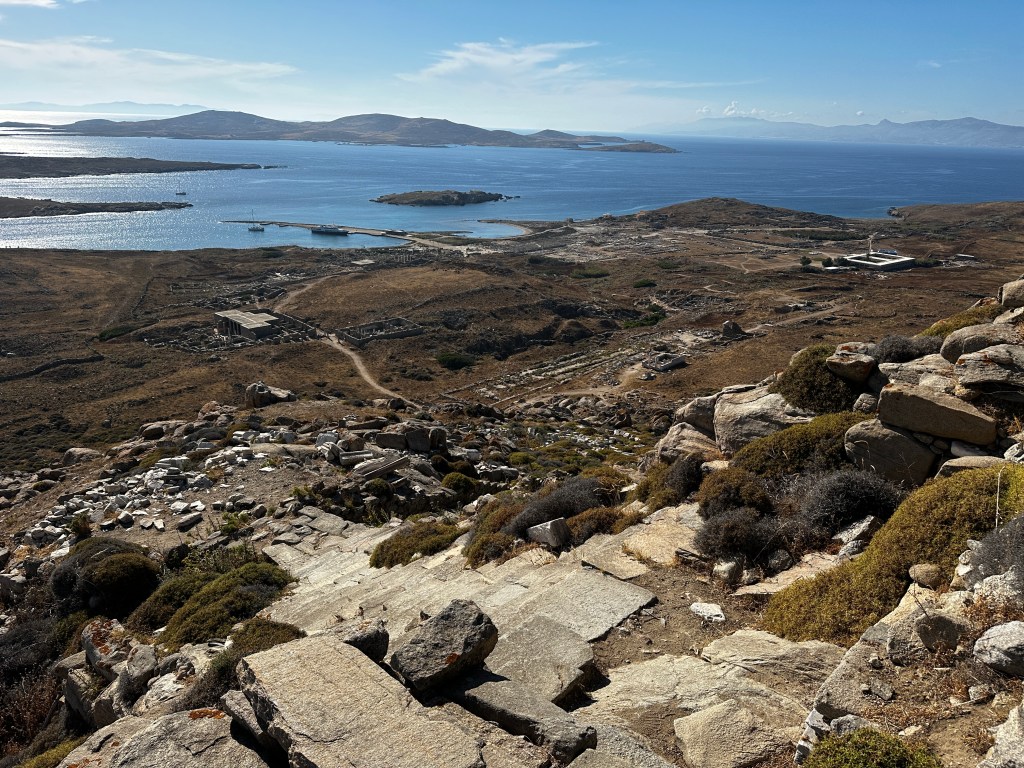
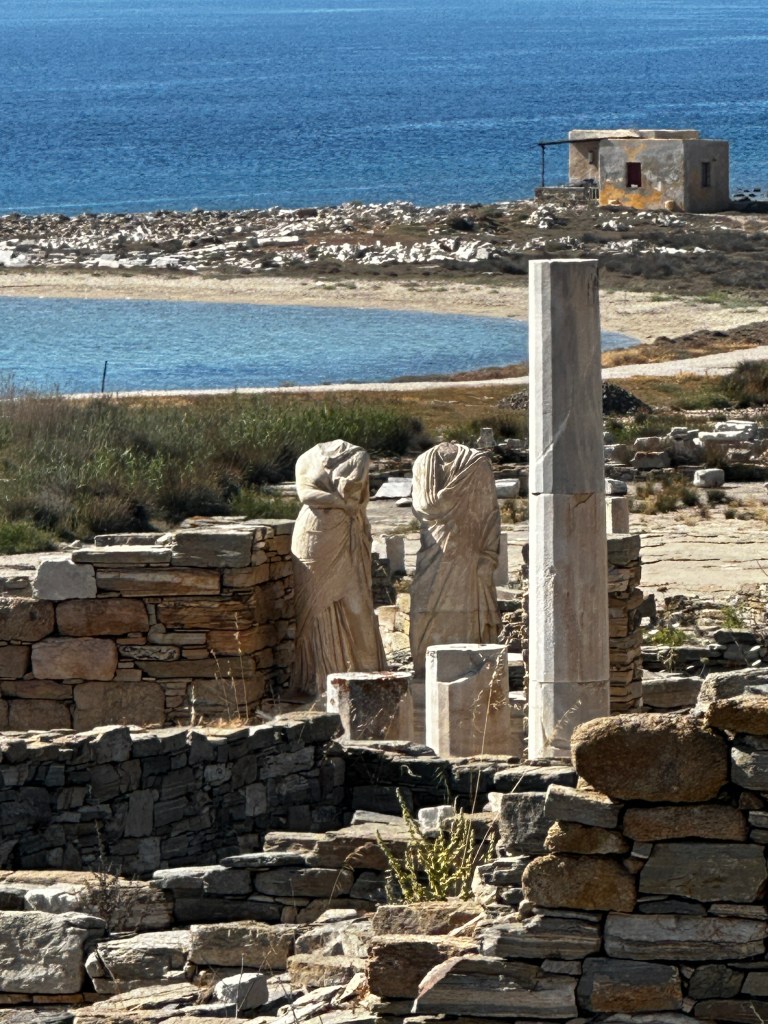


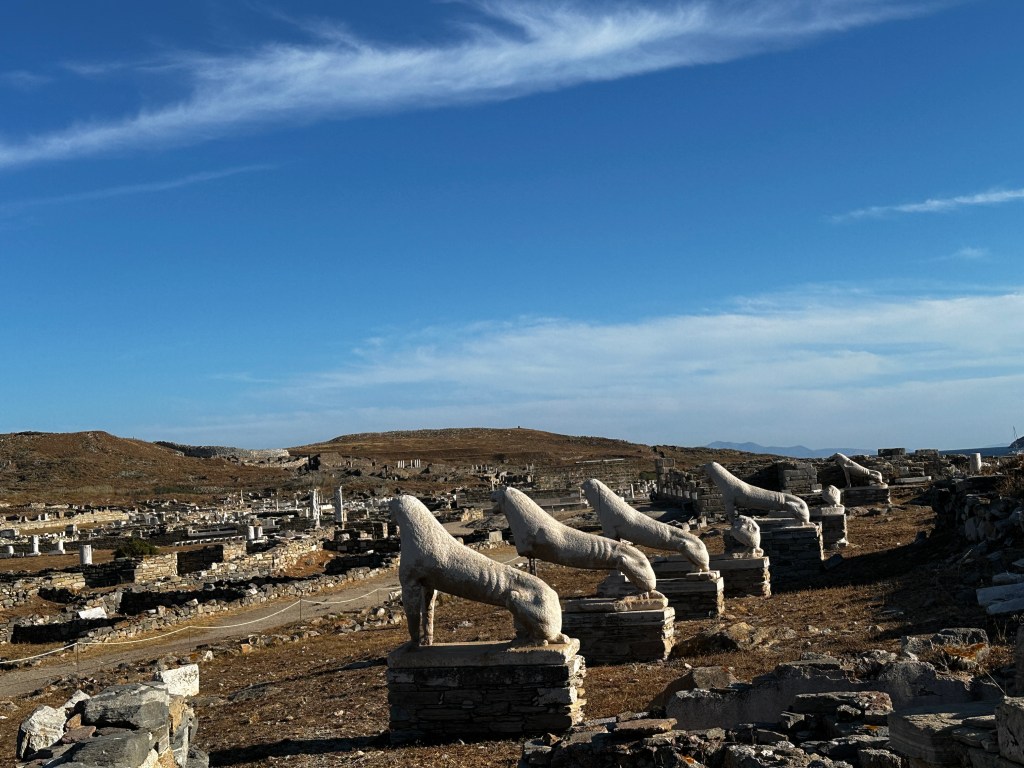

We made our pilgrimage in the afternoon after anchoring on nearby Riniea Island in a crystal clear anchorage. It was a short trip in the dinghy and as the site is so large it was easy to feel as if we were almost alone as we wandered through the remains of tightly packed houses in the market district and amongst grand sprawling villas with mosaic floors and past temple after temple dedicated to various Gods and Goddesses both Greek, Roman and foreign.

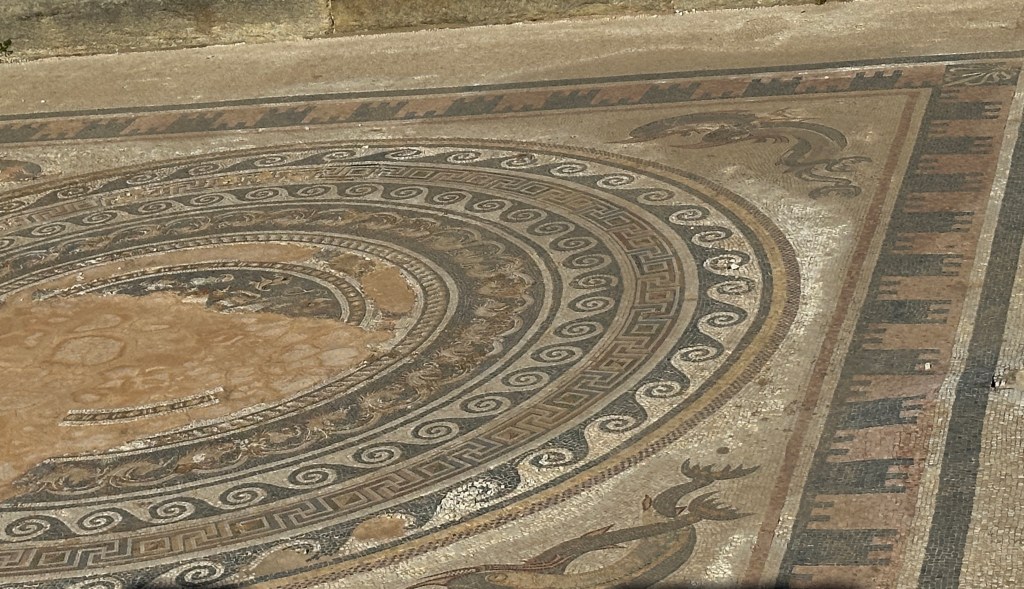
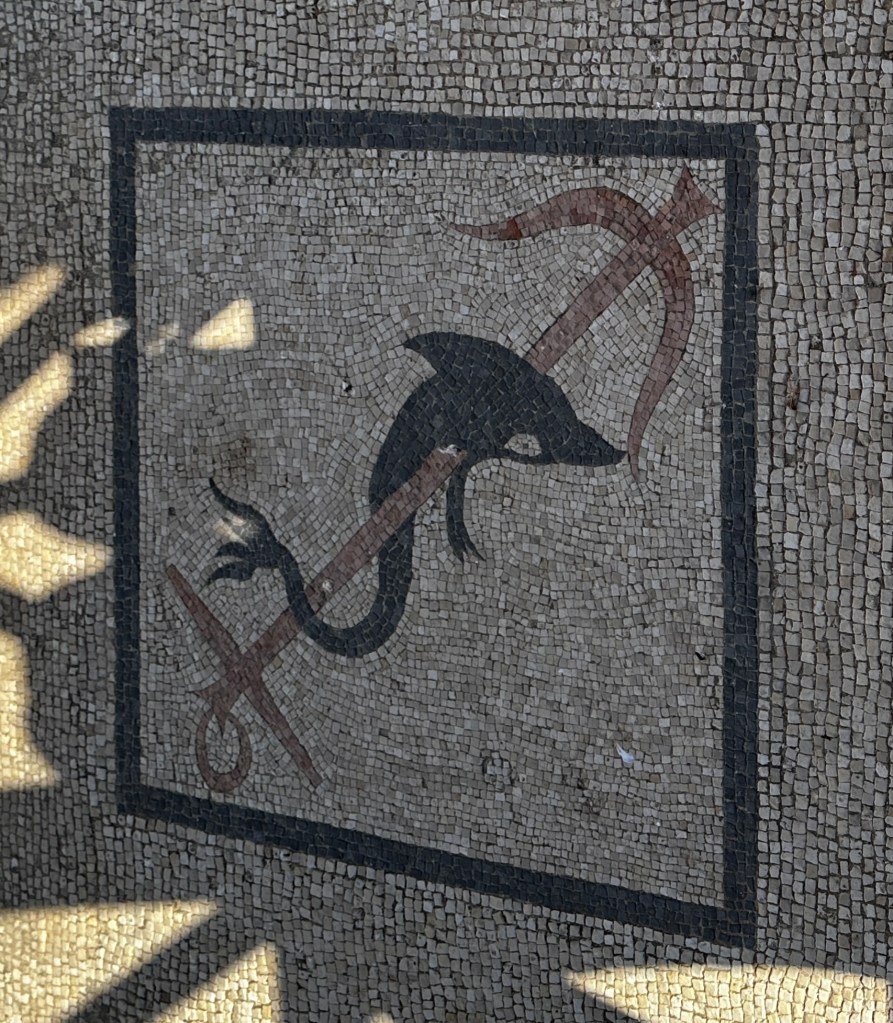
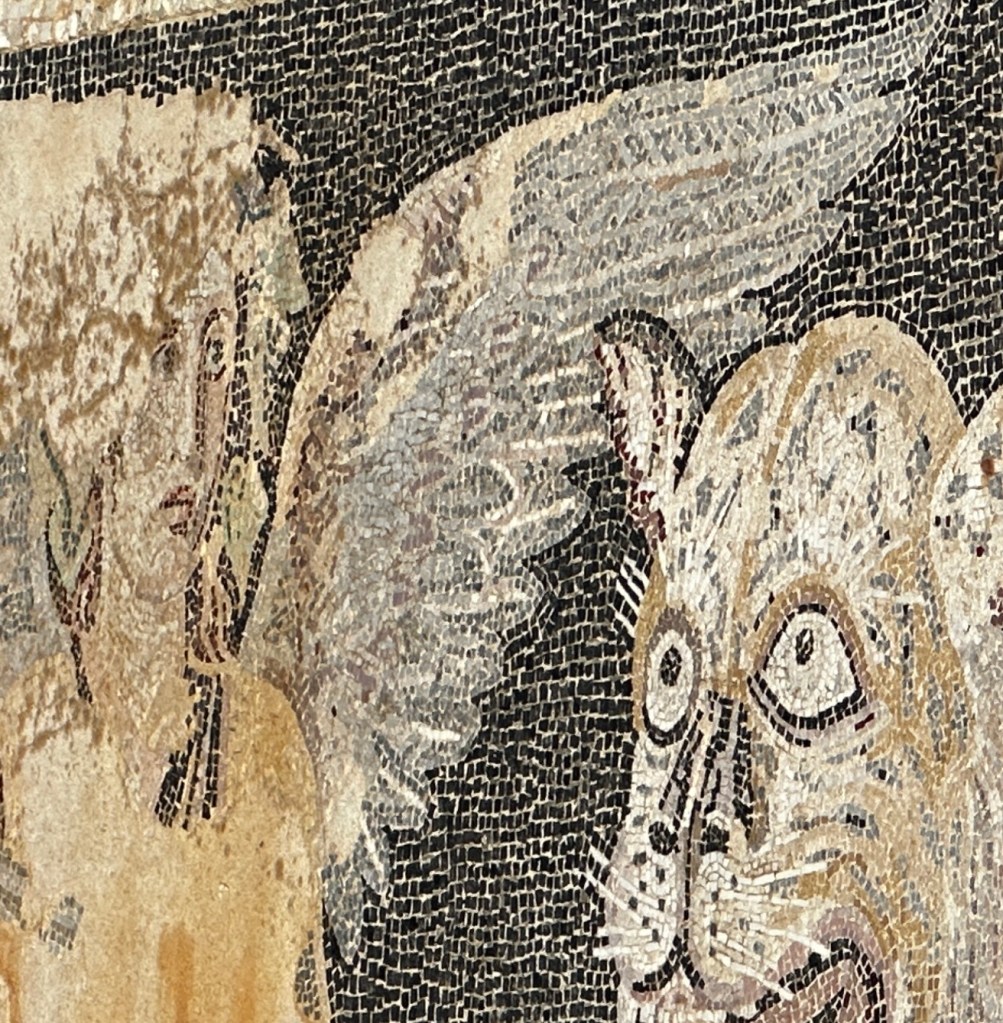

We climbed an unpolished marble staircase to the top of the largest hill on the island which looked out over all the other islands in the Cyclades and down upon the vast remains all over the island.

It was impressive. But I also found it a sad place. None of the statues had heads, they’d all been hacked off and taken away as trophys, one statue even had its marble leg amputated and taken off by foreign looters. It’s probably in a museum somewhere. The lions are mostly headless or missing legs, the sacred lake was drained in 1900 as its stagnant waters were a breeding ground for malarial mosquitos. The amphitheatre was a broken wreck and a good imagination was required to put together all the pieces of Delos now lying on the ground. It felt utterly abandoned to me. The Gods and Goddesses had moved on leaving just the rubble for us to pick though. While this is just my opinion and I realise I am not upselling it I do still think it’s worth a visit. Bearing in mind its checkerboard history is not just a noble one and it’s a reminder that a place can be built upon the profane just as easily as the sacred and Delos found its fortune in both.

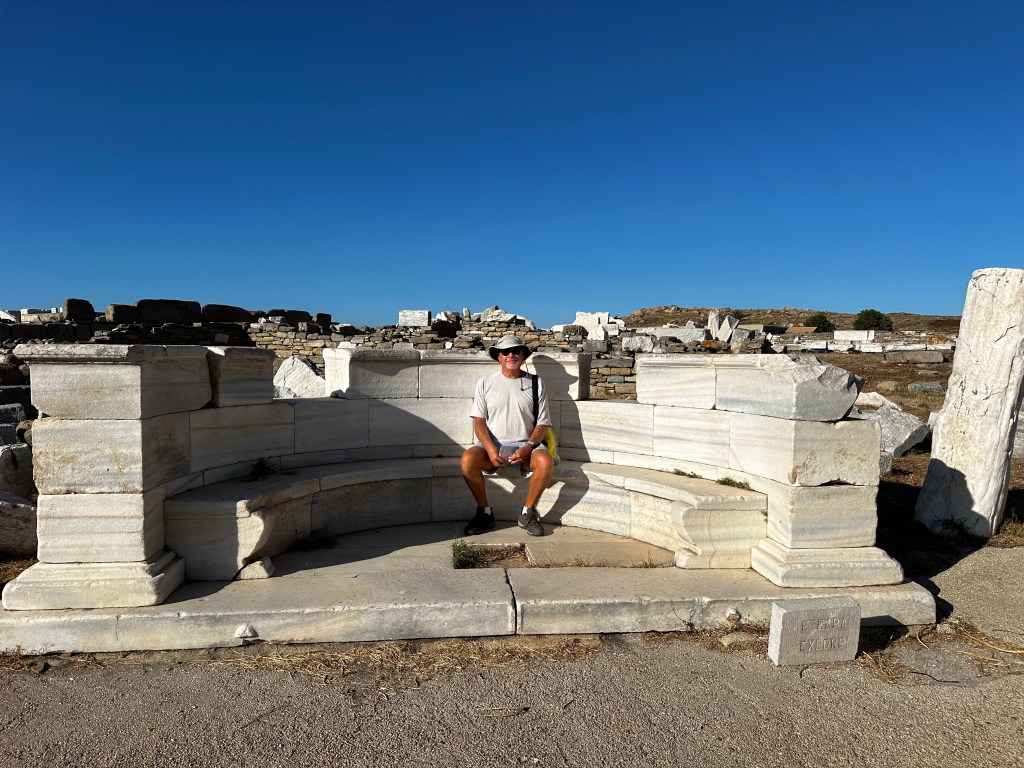
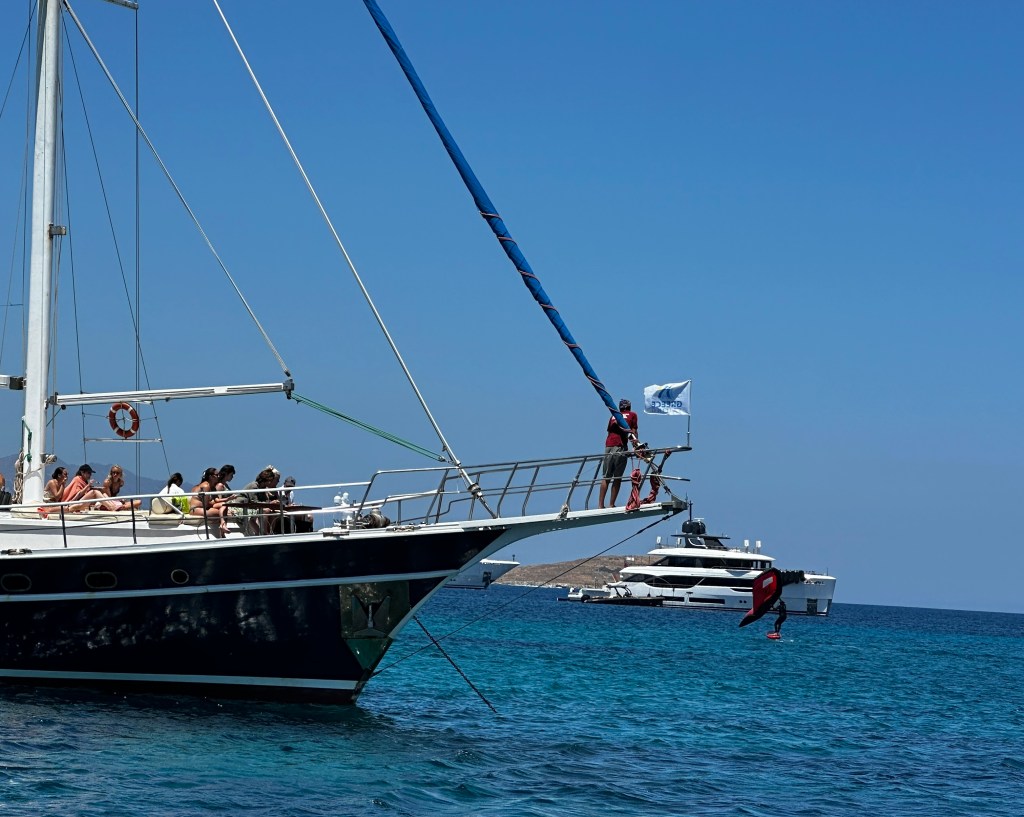
After that bit of cockpit philosophy, we headed off towards Tinos, another place we considered too windy to visit and had therefore decided to squeeze in during this calm period before the summer winds started up in earnest but not before Rick had his first successful kite foiling session of the season.

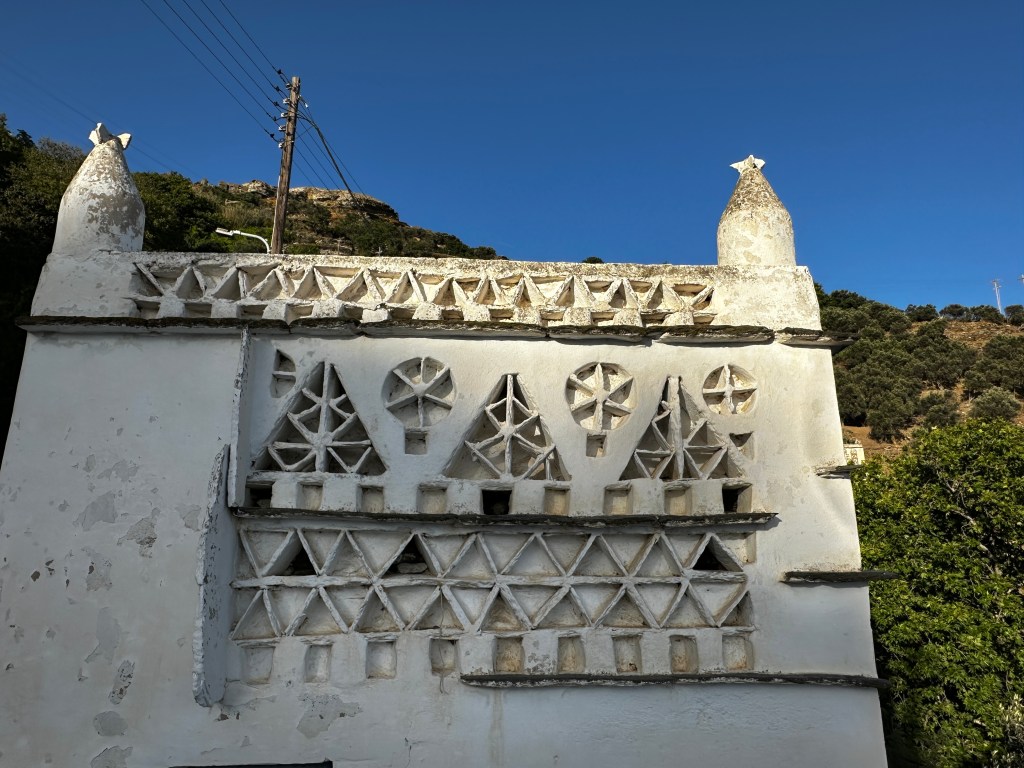
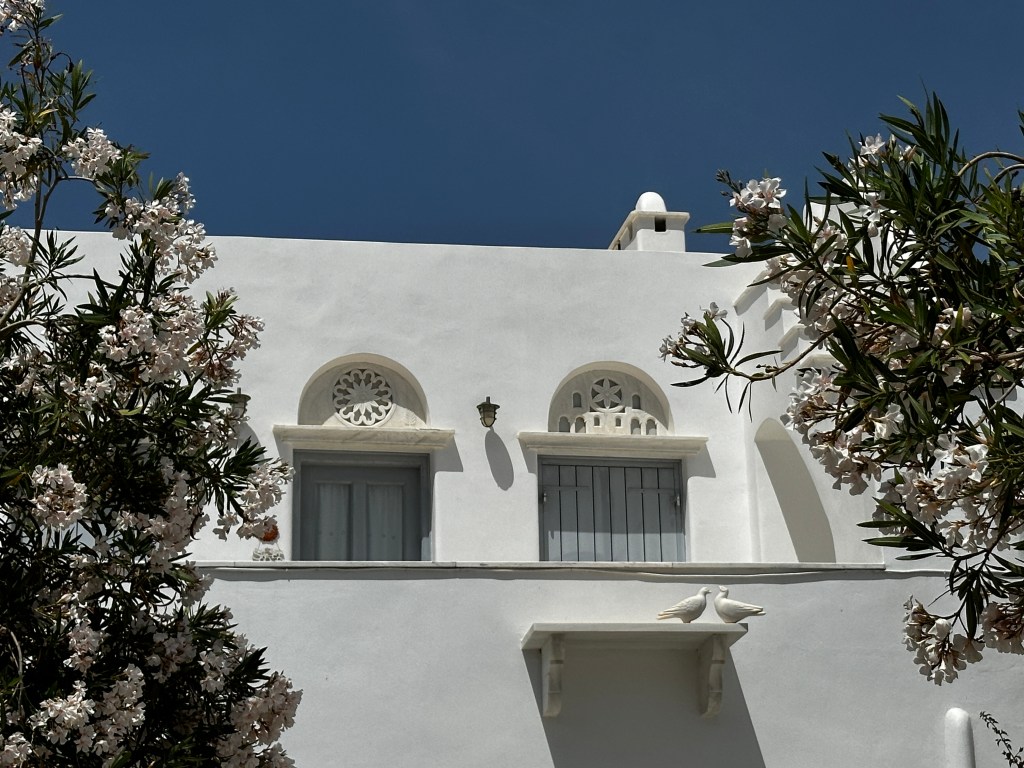
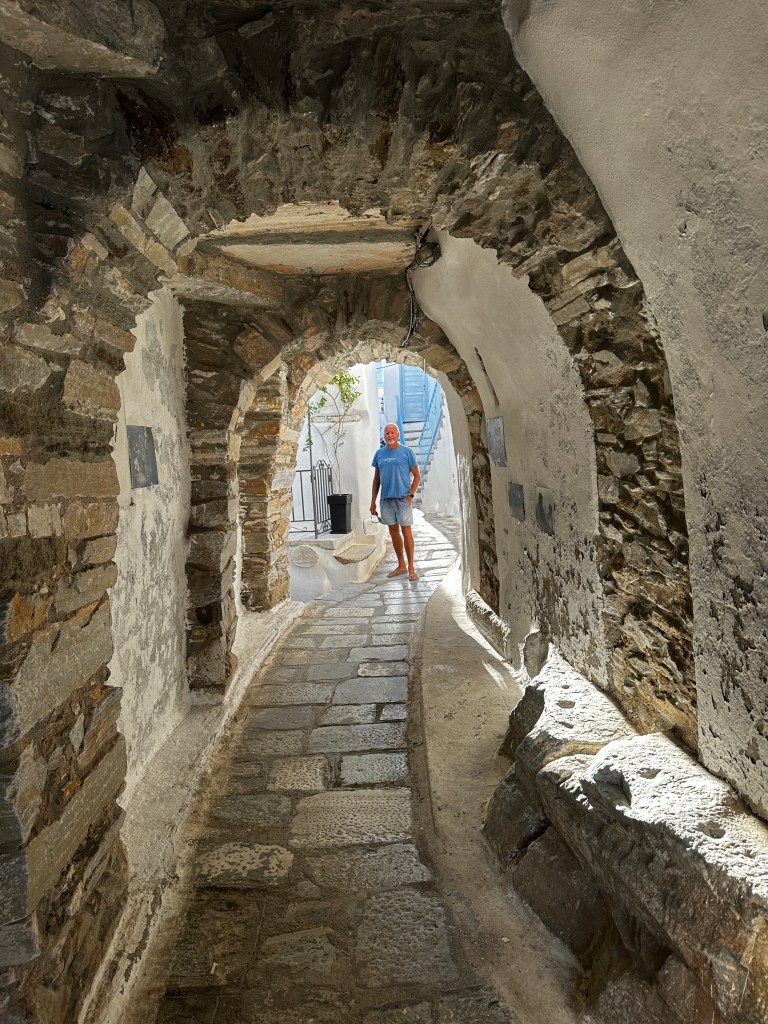
The Greek islands are all drowned mountain tops and some of them still look like this today. Tinos looks like the wild and rocky top of an ancient mountain. The main town is arrayed around a small harbour but the most villages on the island are hanging by their toes to the sides of steep slopes or tucked into small flat areas up on the high boulder covered plateau. The traditional architecture of white block shaped buildings or rough-hewn unadorned rock homes with marble inlays were stacked up hillsides. Often villages contained just homes, a few villas for rent, a church and perhaps a dovecote and no other services. The dovecotes that dot the island can be traced back to the Venetians who ruled the island from the 1300’s to the Ottoman times. They build them all over the island to attract pigeons for breeding (mainly for eating and to use their droppings to enrich the rocky soil). The doves and pigeons often still make use of them today. It’s said that the patterns used in building them attract the birds.


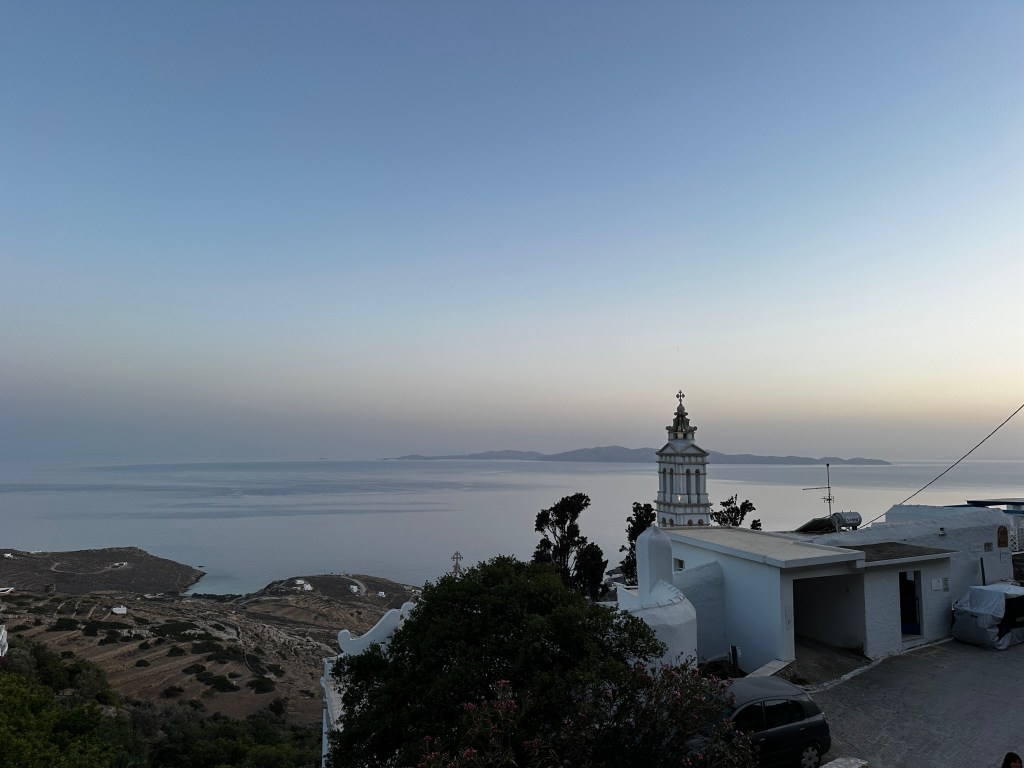




Despite its beauty and wildness the thing that Tinos is most famous for is the church of the Virgin of Evangelistria. It’s built upon a miracle and is famous beyond Greece attracting pilgrims from all over. They pray to an Icon of the Virgin who was discovered after she spoke to a farmer who looked for her but couldn’t find her location. Then she sent a nun a series of dreams asking to be removed from under the ground. A number of digs were made in the location she described and were fruitless until finally after more prompting and a larger effort she was found. She was discovered underground in an old Byzantine Church which was built upon a temple to Dionysos. She appears to be way older than the church, believed to be painted by the Apostle Luke and hidden from looting during successive invasions.

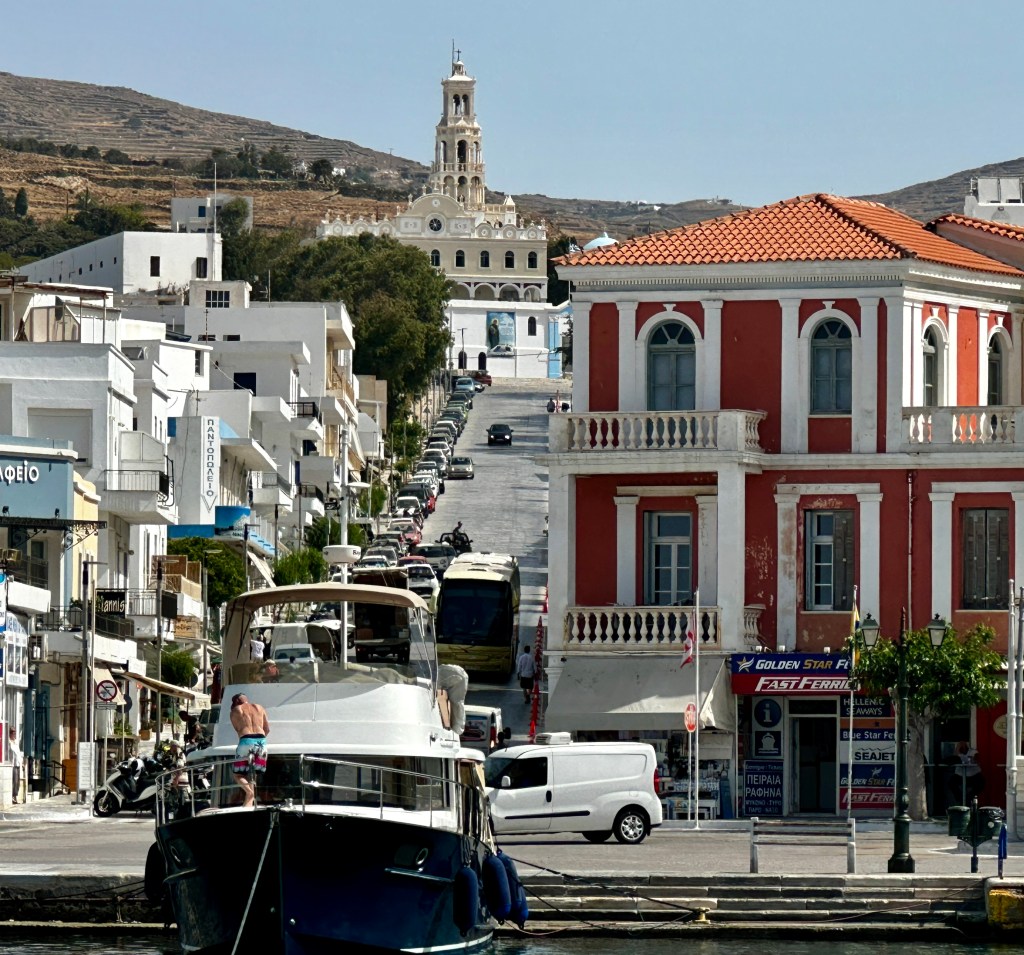
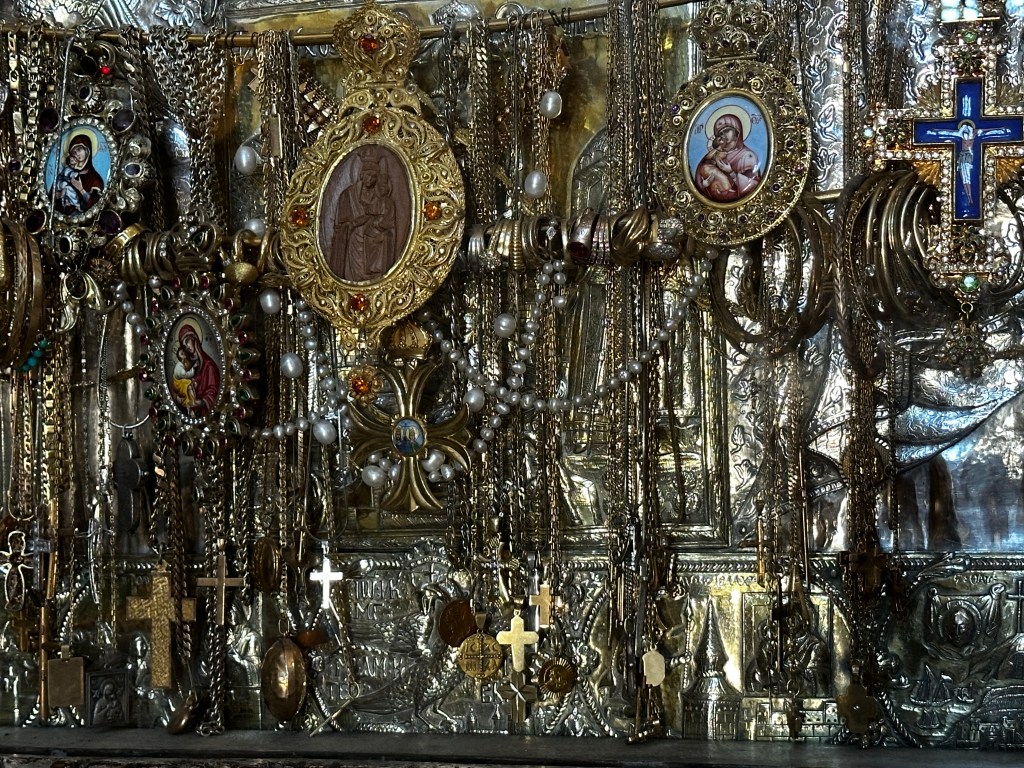
People asking for a miracle or for the Virgin’s intersession in their life will make the journey from the port on their hands and knees. We, however walked up to the church early in the morning when there was no one making their pilgrimage. We entered the church to discover it full even though it was really early. A priest was giving a sermon but people were circling past and kissing the glass covering of what looked like a painting covered in jewels. This was the Icon. I couldn’t see the Virgin at all as she was so adorned. An attendant cleaned the glass after people has kissed her and people filed by then to light candles to her beyond the queue. The reverence and sacredness in this space was palpable. After spending some time we left the faithful to their prayers and went in search of the holy well which turned out to be in a small chapel under the main church. We had bought a few small bottles to fill with water but had to wait for a guy filling his one litre water bottles first. We wondered what he was using them for.
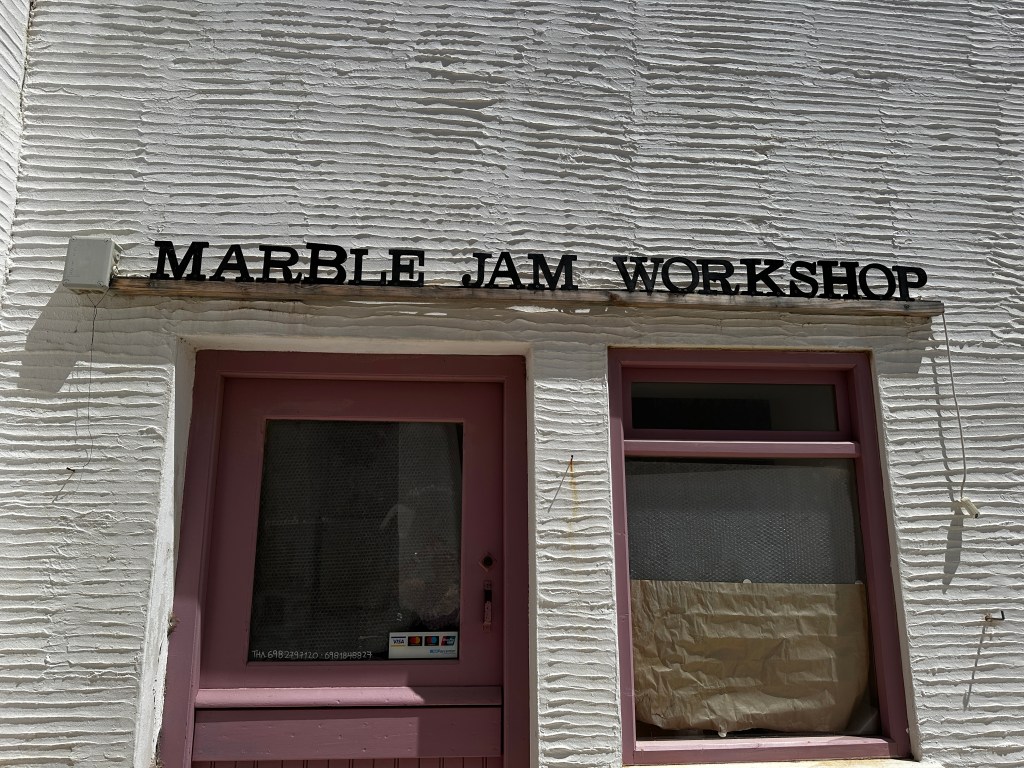
Tinos was such a surprise. We found some stunning villages, a world class museum about Marble, Tinos’s biggest export which gave us a new appreciation for the cutting and sculpting process, a Miracle Icon and super kind and friendly people. I think we’ll be back but in the meantime Paros is calling. Her siren song has caught us in her spell and we have been trapped here for nearly 3 weeks, but that’s another story.


 ocean-pilgrim
Leave a comment